Sarcoma Awareness 2026: You are not alone 🎗️
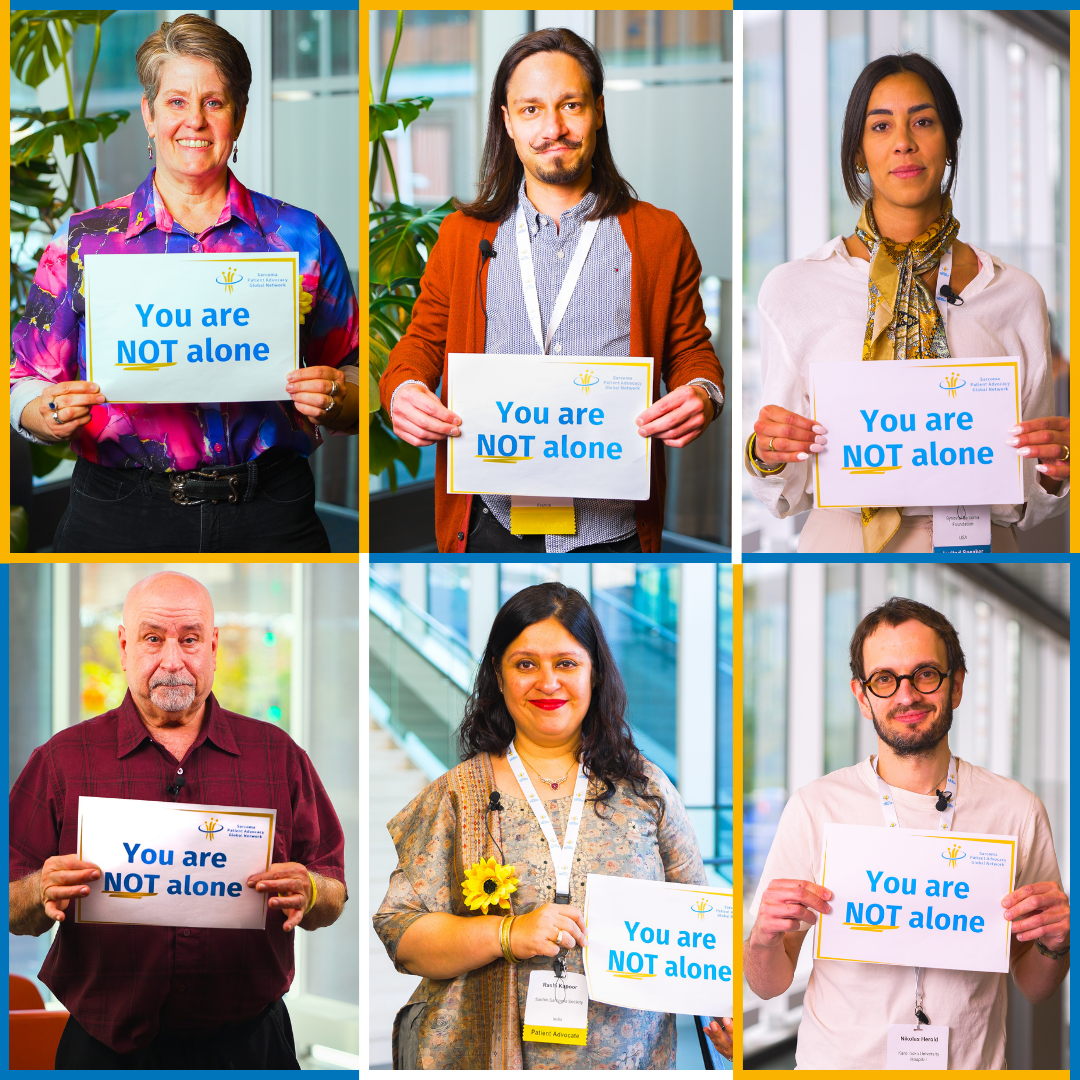

Sarcoma Awareness Month:
Sarcoma Awareness Month takes place each year in July — a time when our global sarcoma community unites with a shared goal: to raise awareness of sarcoma and stand together in support of those affected by it.
This year’s theme are the challenges of sarcoma patients.
Sarcoma is not one disease. It is more than 100 rare cancer subtypes affecting people of all ages, often with symptoms that appear harmless at first.
Because sarcoma is rare and highly heterogeneous, patients and families frequently face challenges that are very different from those seen in more common cancers: delayed diagnosis, difficulty accessing specialist care, limited research, and a sense of isolation.
Sarcoma Awareness Month 2026 focuses on these real challenges.
Through this campaign, SPAGN brings together patients, caregivers, healthcare professionals, researchers, and the public to build understanding, share lived experiences, and highlight why awareness, expertise, and community matter.
Throughout July, we have one united message that connects us all:
You are not alone.
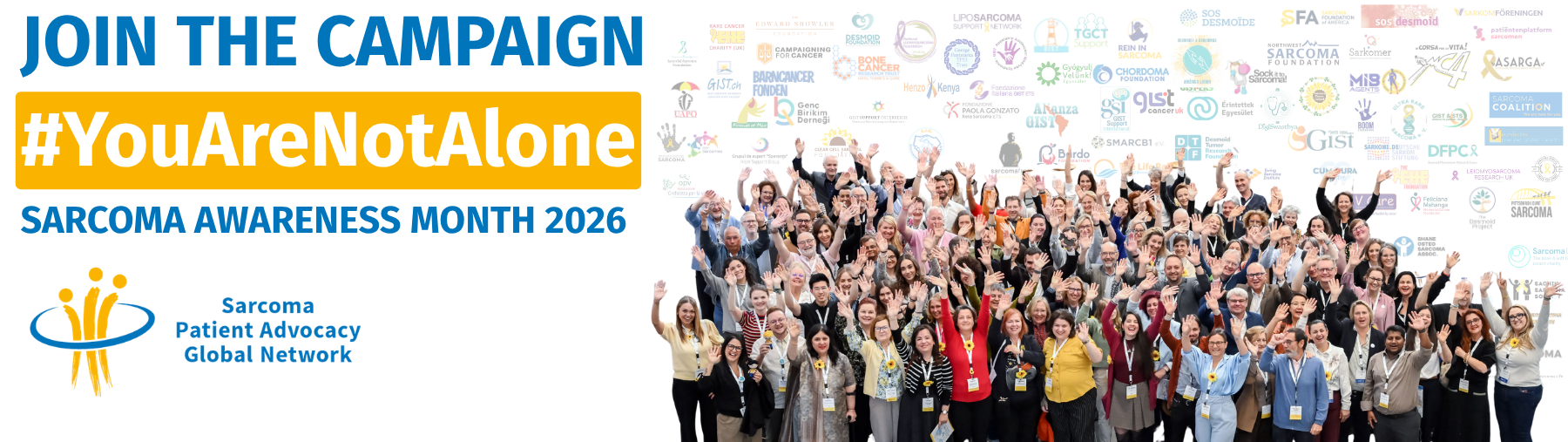
How You Can Support Sarcoma Awareness Month:
Challanges of Sarcoma
Sarcoma Awareness Month is for everyone—patients, caregivers, healthcare professionals, advocates, and the general public. Each voice adds to a stronger, more connected global community working to improve awareness, understanding, and care for sarcoma.

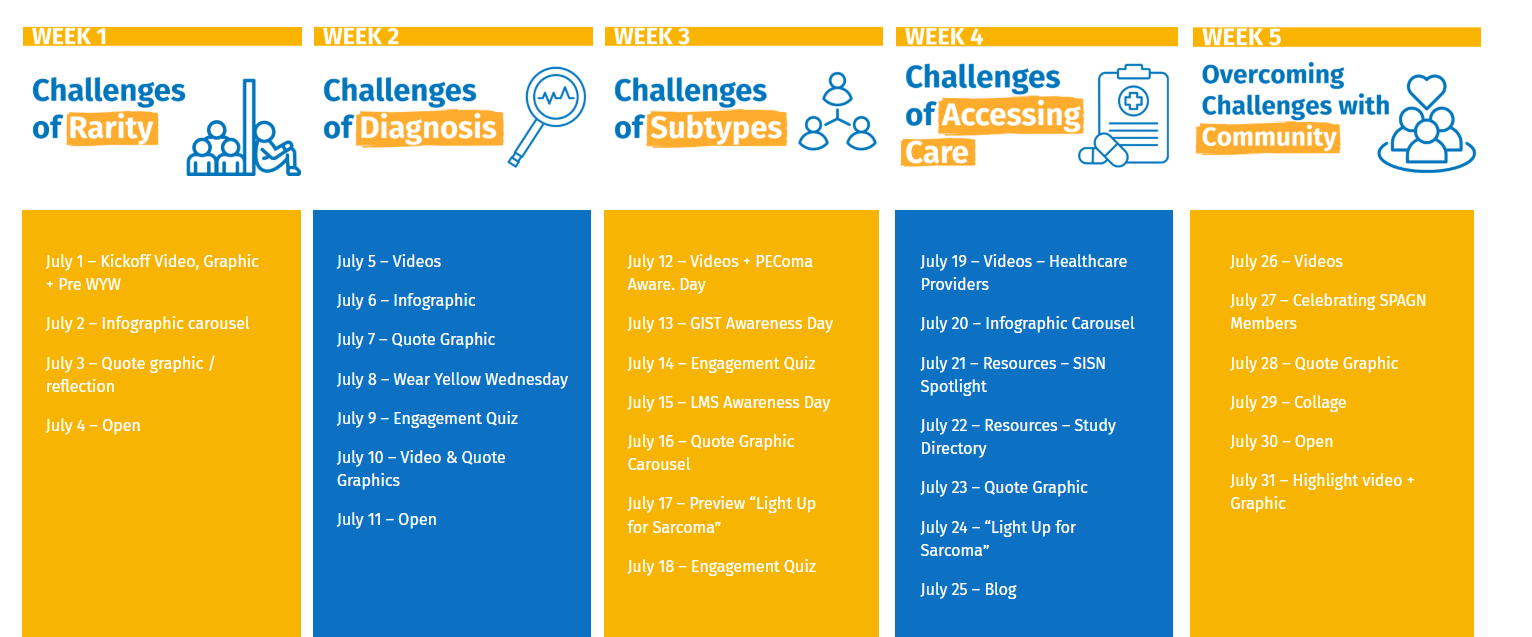
Check Out the SAM Schedule
Publication & Podcast
Building on the first findings presentations, a full scientific analysis of the Global Sarcoma Diagnosis Pathway Survey has now been developed and published under the title “Factors Associated with Time to Sarcoma Diagnosis.”
This peer-reviewed publication provides a comprehensive evaluation of the global dataset, examining which patient-, socioeconomic-, and system-level factors are associated with prolonged diagnostic timelines in sarcoma.
The publication translates the initial findings into a detailed scientific analysis and further confirms that diagnostic delays are primarily driven by modifiable healthcare system and awareness-related factors rather than tumour characteristics.