ESMO Congress 2026: Selected Sarcoma Research Highlights

SPAGN Science Translator | Congress Report
Authors: Kathrin Schuster and Bernd Kasper
Status: Draft for scientific review
The European Society for Medical Oncology (ESMO) is one of the leading professional organisations in cancer care. Its annual congress is among the most important international oncology meetings, bringing together researchers and clinicians to present and discuss new findings that may influence future cancer treatment.
The ESMO Congress 2026, held in Madrid from 23–27 October, featured several notable developments in sarcoma, gastrointestinal stromal tumours (GIST) and related rare tumours.
For this edition of the SPAGN Science Translator, we have selected research findings that are particularly relevant to patients and patient advocates. Our focus is on emerging treatment approaches, advances in personalised medicine and outcomes that matter to patients.

Osteosarcoma: Could antibody-drug conjugates open a new treatment era?
One of the most significant sarcoma presentations at ESMO 2026 was the phase III ARTEMIS-011 trial (LBA9), featured in a Presidential Symposium – a particularly prominent scientific session for major new research findings. Having an osteosarcoma study presented in this setting was especially noteworthy, bringing renewed visibility to sarcoma research at one of the world's leading oncology congresses.
Treatment options for patients with relapsed or refractory osteosarcoma remain extremely limited, with little progress since the introduction of chemotherapy decades ago.
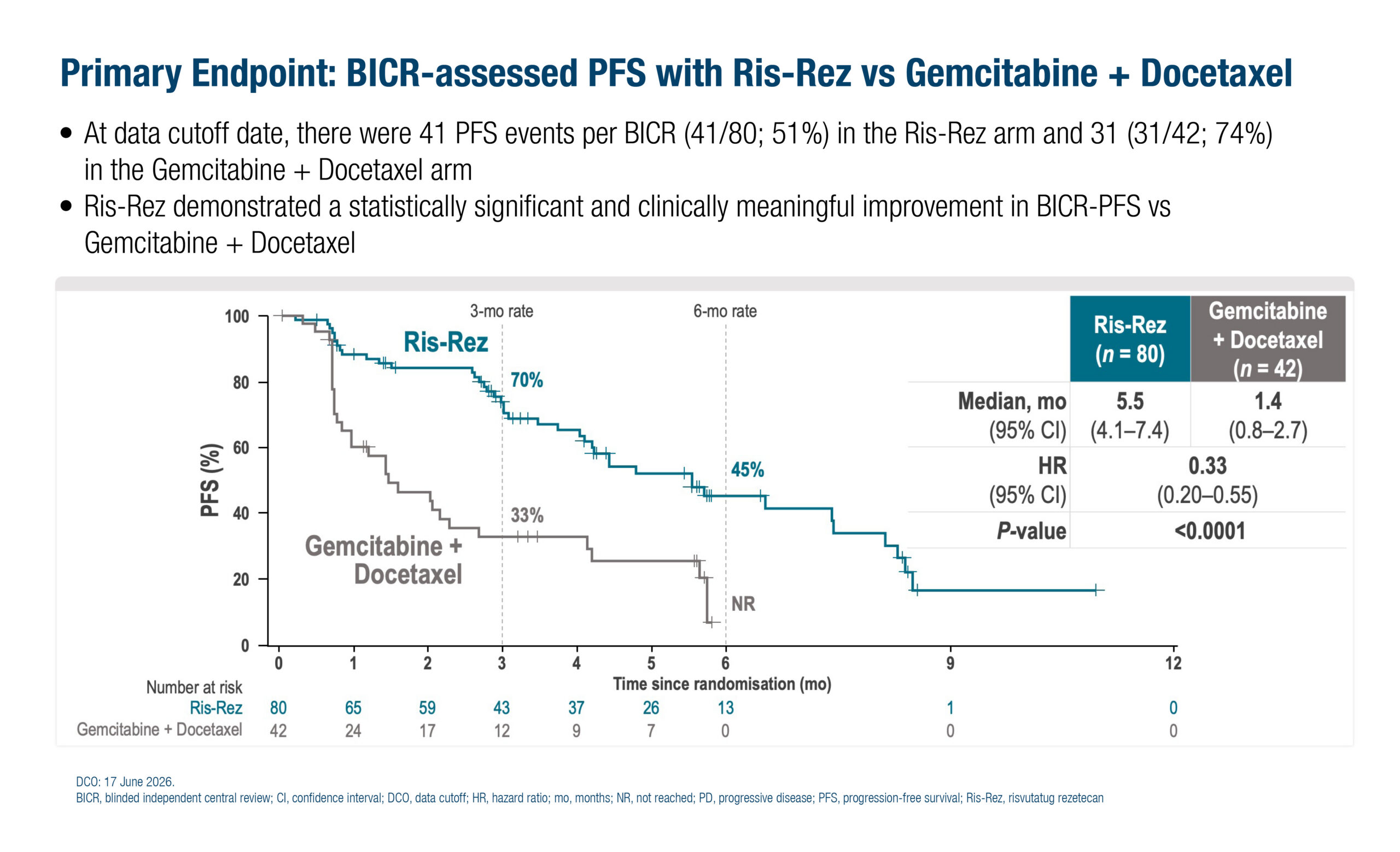
ARTEMIS-011 investigated risvutatug rezetecan (Ris-Rez), an antibody-drug conjugate (ADC), in 122 adolescent and adult patients with relapsed or refractory osteosarcoma who had received at least two previous treatments.
ADCs combine an antibody that recognises a specific target on cancer cells with a powerful cancer-killing drug. Ris-Rez targets a protein called B7-H3 and delivers a topoisomerase I inhibitor, which interferes with DNA replication in cancer cells.
The trial demonstrated a significant improvement in progression-free survival (PFS), the time patients lived without their cancer getting worse: 5.5 months with Ris-Rez compared with 1.4 months with gemcitabine and docetaxel chemotherapy. This corresponds to a 67% relative reduction in the risk of disease progression or death during the study period. Tumour responses were observed in 15% of patients receiving Ris-Rez, compared with approximately 2% receiving chemotherapy.
These findings represent an important advance in a disease where new treatment options have been urgently needed for many years. However, the median follow-up was still relatively short at 7.1 months, and it is not yet known whether Ris-Rez will help patients live longer.
Treatment-related side effects were common, particularly changes in blood cell counts. Severe treatment-related adverse events (grade 3 or higher) occurred in 93% of patients receiving Ris-Rez compared with 83% receiving chemotherapy. Dose reductions were required in 71% versus 26% of patients, although permanent treatment discontinuations due to side effects were uncommon. One patient receiving Ris-Rez developed treatment-related lung toxicity.
What could these findings mean for future treatment?
Beyond the results of this particular trial, ARTEMIS-011 could mark the beginning of a new treatment era in osteosarcoma.
Commenting on the findings in an ESMO article, Dr Nathalie Gaspar from Gustave Roussy, France, highlighted the potential of ADCs as a new treatment approach. Other ADCs with different targets and cancer-killing drugs are already under development. According to Gaspar, further research should explore which approaches are most effective, whether ADCs could be introduced earlier in treatment, and whether combining them with chemotherapy, targeted therapies or immunotherapy could improve outcomes.
At the same time, she emphasised that important questions remain. Researchers do not yet fully understand why Ris-Rez is effective in osteosarcoma, and treatment-related toxicity – particularly effects on blood cells – remains a concern. The trial was conducted in China, and further international research will be important.
For patients and patient advocates, ARTEMIS-011 therefore represents more than a positive clinical trial: it provides encouraging evidence for a new treatment approach in a disease where progress has been limited for decades, while opening important questions for future research.
Rare sarcoma subtypes: Exploring new treatment approaches
Developing effective therapies for rare sarcoma subtypes is particularly challenging. Patient populations are small, biological characteristics vary considerably, and conducting large clinical trials can be difficult. Against this background, early evidence of activity with new treatment approaches is an important step towards developing additional options for patients.
Epithelioid sarcoma
Epithelioid sarcoma is an exceptionally rare soft tissue sarcoma with limited treatment options, particularly when the disease is advanced.
A phase II study (3714O) investigated epsametostat (HH2853), an oral treatment that inhibits the EZH1 and EZH2 enzymes involved in regulating gene activity. Among 75 patients evaluable for efficacy, tumour responses were observed in 40%, with a median progression-free survival of 13.1 months.
These findings are encouraging for a rare sarcoma subtype with limited treatment options and support further investigation of EZH1/2 inhibition.
Commenting on the findings in an ESMO article, Dr Katarzyna Kozak from the Maria Skłodowska-Curie National Research Institute of Oncology, Poland, highlighted the promising results compared with previously reported outcomes with chemotherapy and the earlier EZH2 inhibitor tazemetostat.
However, she also emphasised the need for longer follow-up to assess potential safety risks. Severe treatment-related adverse events occurred in approximately 39% of patients. In particular, the withdrawal of tazemetostat due to an increased risk of secondary blood cancers raises questions about the long-term safety of treatments targeting this pathway.
The study did not include a randomised comparison group, and the results currently come from patients treated in China. Further research will help establish the role of epsametostat in epithelioid sarcoma.
Desmoplastic small round cell tumour (DSRCT)
DSRCT is a very rare and aggressive sarcoma, typically affecting adolescents and young adults. Treatment options for advanced disease remain limited.
A French multicentre retrospective study (3722RO) investigated trastuzumab deruxtecan, an antibody-drug conjugate already used in certain other cancers.
Among 12 patients with relapsed or refractory DSRCT, 10 experienced a tumour response, including one complete response. Responses were also observed in patients whose tumours showed little or no detectable HER2 expression, the protein targeted by the antibody component of the drug.
For a very rare and aggressive disease with few effective treatment options, these responses provide an encouraging signal for further research. Larger studies and longer follow-up are needed to better understand the durability of responses, treatment safety and which patients may benefit most.
No cases of treatment-related interstitial lung disease were reported in this patient group, although this potentially serious lung toxicity is a known risk of trastuzumab deruxtecan.
Undifferentiated pleomorphic sarcoma and dedifferentiated liposarcoma
Another presentation (3725RO) explored a very different treatment approach: tumour-infiltrating lymphocyte (TIL) therapy.
TIL therapy uses immune cells collected from a patient's tumour. These cells are multiplied in a laboratory and then returned to the patient with the aim of strengthening the immune system's ability to attack the cancer.
Updated results with lifileucel showed tumour responses in four of eight patients with undifferentiated pleomorphic sarcoma (UPS) or dedifferentiated liposarcoma (DDLS) who received a cell product meeting the study's manufacturing specifications. Across all ten treated patients, four experienced a response. All four responses were ongoing at the reported follow-up.
These early findings provide encouraging evidence that TIL therapy may have activity in UPS and DDLS, two sarcoma subtypes with limited treatment options.
However, TIL therapy is an intensive and complex treatment. All ten treated patients experienced severe reductions in blood cell counts following the preparative chemotherapy, and other serious side effects occurred.
A larger study, SARATOGA, is underway to further investigate the effectiveness of lifileucel, the durability of responses and how its potential benefits compare with the considerable treatment burden.
GIST: New targeted therapies and more personalised monitoring
Gastrointestinal stromal tumours (GIST) are often driven by changes in genes such as KIT or PDGFRA. Targeted therapies that interfere with these signals have transformed treatment, but resistance frequently develops over time. Finding effective treatments after resistance occurs remains an important research priority.
Three studies presented at ESMO 2026 explored different ways of addressing this challenge.
The phase III PEAK trial (3717RO) investigated the combination of bezuclastinib and sunitinib in patients with previously treated advanced GIST. The two drugs target different KIT mutations, with the aim of overcoming resistance more effectively than either approach alone.
Earlier randomised results demonstrated significantly improved progression-free survival with the combination compared with sunitinib alone (16.5 versus 9.2 months).
The analysis presented at ESMO focused on patients who initially received sunitinib alone and subsequently switched to the combination after their disease progressed. Among 128 patients who made this switch, median progression-free survival on the combination was 7.4 months, and tumour responses were observed in approximately 30%.
These findings provide additional evidence of treatment activity after progression on sunitinib, although the crossover results are not a new randomised comparison and should be interpreted separately from the primary PEAK findings.
The StrateGIST 1 study (3718RO) investigated velzatinib, another investigational KIT inhibitor, alongside the potential use of circulating tumour DNA (ctDNA). These are fragments of tumour DNA that can be detected in the blood.
The presentation focused on whether changes in ctDNA during treatment were associated with outcomes. Patients whose KIT-related ctDNA levels fell to very low levels generally had longer progression-free survival than those without such a reduction.
These findings support further investigation of blood-based molecular monitoring as a way to assess treatment response. Larger studies are needed to establish whether ctDNA measurements can reliably guide treatment decisions in routine care.
A third study (3719RO) investigated NB003, a selective KIT inhibitor designed to target a broad range of resistance mutations, in patients with advanced KIT-mutant GIST.
Results from the phase I study showed tumour responses in approximately 29% of patients overall. Particularly encouraging activity was observed among patients receiving NB003 as their third or fourth treatment line, with response rates of 47% and 46%, respectively.
These early findings have supported further clinical development, including an ongoing phase III trial comparing NB003 with regorafenib in third-line GIST.
Together, these studies demonstrate continued efforts to overcome treatment resistance in GIST, develop new targeted drugs and use molecular information to guide treatment more precisely.
Desmoid tumours: Treatment benefits must include quality of life
Desmoid tumours are rare, locally aggressive tumours that do not spread to distant organs but can cause substantial pain, functional limitations and disruption to everyday life. Their behaviour is unpredictable: some remain stable or shrink without treatment, while others progress and require medical intervention.
This makes it particularly important to understand not only whether a treatment reduces tumour growth, but also whether it improves symptoms and daily functioning.
The phase III RINGSIDE trial (3724RO, 3754P, 3755P) investigated varegacestat, a gamma-secretase inhibitor, in patients with progressing desmoid tumours.
Varegacestat significantly delayed disease progression compared with placebo, reducing the relative risk of progression or death by 84% during the study period. Tumour responses were observed in 56% of patients receiving varegacestat versus 9% receiving placebo.
Importantly, the study also assessed patient-reported outcomes – information provided directly by patients about their symptoms and how the disease affects their lives.
Patients receiving varegacestat reported improvements in pain, desmoid-related symptoms and physical functioning. These included reductions in fatigue, swelling, muscle weakness and difficulties with movement. Improvements were observed relatively early during treatment and were maintained at later assessments.
These findings demonstrate treatment benefits beyond tumour shrinkage, including improvements in symptoms and daily functioning that are directly relevant to patients.
However, treatment-related side effects were common. Many patients required dose reductions, and ovarian toxicity was reported in a substantial proportion of premenopausal women. These effects are particularly relevant when weighing treatment benefits against potential long-term consequences.
A separate phase I/II study (3715O) investigated zolucatetide, an investigational treatment that directly targets the β-catenin signalling pathway, which plays a central role in desmoid tumour development.
Updated results included 76 patients, many of whom had previously received other treatments, including gamma-secretase inhibitors.
Among patients who started treatment at doses of at least 450 mg and had reached the relevant assessment points, tumour responses were observed in 13 of 21 patients after 24 weeks and 13 of 18 after 32 weeks.
These findings suggest promising activity, including in previously treated patients. Most reported treatment-related side effects were mild or moderate, and no patients had discontinued treatment because of treatment-related adverse events at the data cutoff. Ovarian toxicity had not been reported.
The results are encouraging, particularly given the importance of long-term tolerability in desmoid tumours. However, the median follow-up for the overall study population was only four months, and the response rates at later timepoints were based on relatively small groups of patients. Longer follow-up and further studies will be important to establish the treatment's effectiveness and safety.
For patients, these developments offer additional hope for treatment approaches that can control disease while also addressing symptoms and quality of life.
TGCT: Measuring what matters to patients
Tenosynovial giant cell tumour (TGCT) is a rare tumour affecting joints, tendons and surrounding tissues. Although usually not life-threatening, it can cause significant pain, swelling, stiffness and limitations in movement. Repeated surgery may also affect long-term joint function.
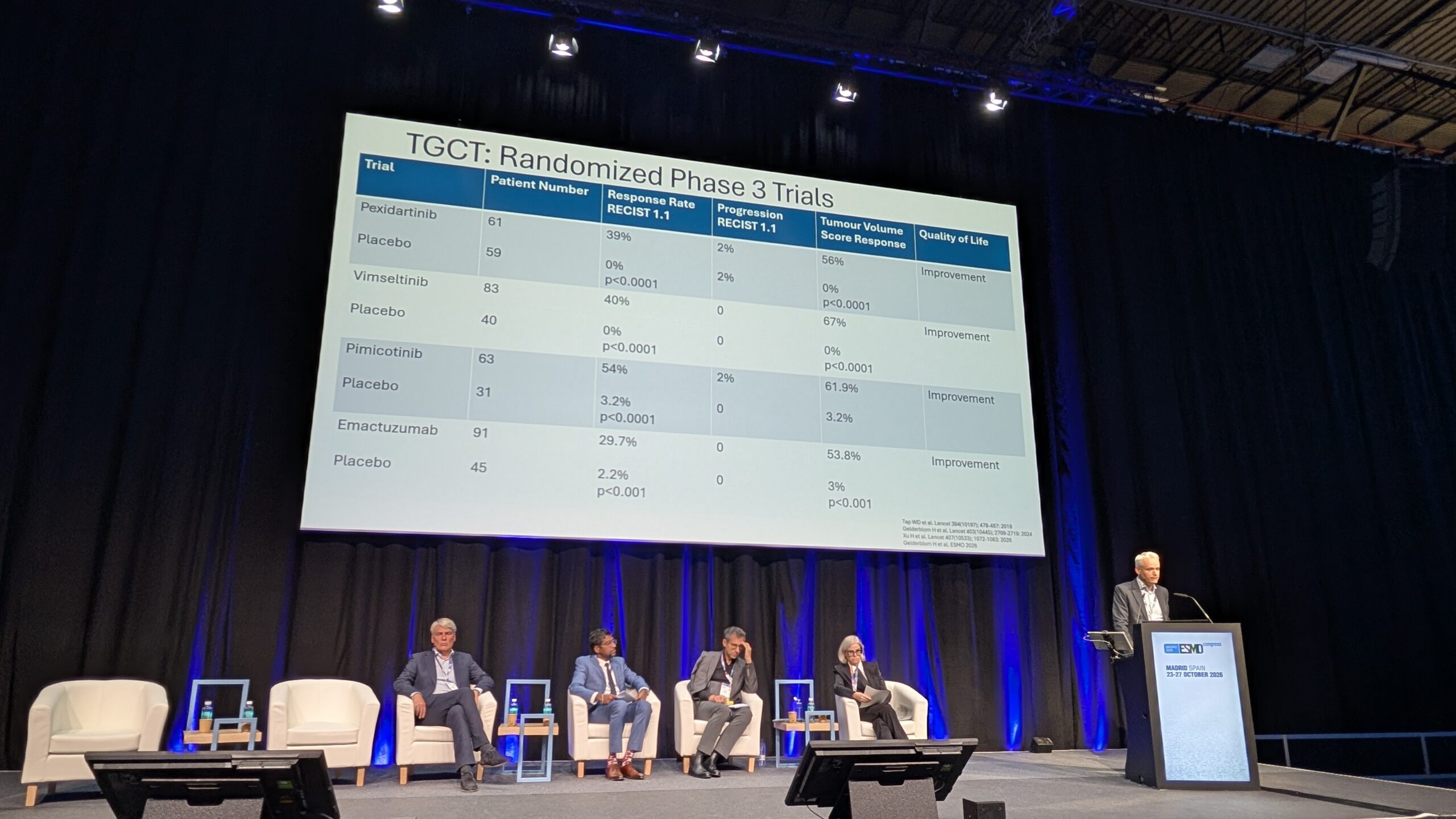
The phase III TANGENT trial (LBA89) investigated emactuzumab, a treatment targeting CSF1R, a protein involved in the development of TGCT.
After six months, tumour responses were observed in 30% of patients receiving emactuzumab compared with 2% receiving placebo. Using a TGCT-specific measure of tumour volume, response rates were 54% versus 7%.
Importantly, patients receiving emactuzumab also experienced statistically significant improvements in pain and joint stiffness from Week 2 onwards, and in physical function and range of motion from Week 4 onwards. These improvements were sustained during the study period.
These results are particularly relevant because tumour shrinkage alone does not fully capture the impact of TGCT or the benefits of treatment. Improvements in pain, mobility and physical function can make a meaningful difference to everyday life.
However, side effects were common. 53% of patients receiving emactuzumab experienced adverse events of grade 3 or higher, compared with 16% receiving placebo. The most frequent side effects included itching, swelling around the eyes and fatigue. Many severe events involved laboratory abnormalities rather than symptoms.
While general quality-of-life scores showed a numerically greater improvement with emactuzumab, this difference was not statistically significant.
The findings demonstrate improvements in both tumour response and patient-relevant symptoms and function, while highlighting the importance of balancing treatment benefits against potential risks.
Looking ahead
ESMO Congress 2026 brought encouraging developments for sarcoma research, including positive phase III results in osteosarcoma and TGCT, as well as promising early findings for several rare sarcoma subtypes.
For diseases with small patient populations and often limited treatment options, these developments are particularly important. While further research is needed to establish the role of emerging therapies, the studies demonstrate that new treatment approaches are being actively explored across different sarcoma subtypes.
The results in desmoid tumours and TGCT also highlight the importance of assessing treatment benefits beyond tumour response, including improvements in symptoms and physical functioning that matter directly to patients.
About this report and its sources
This article is based on published congress abstracts, selected presentation materials and other publicly available information. It presents selected research highlights rather than a comprehensive review of all sarcoma-related presentations.
Abstract numbers are provided alongside the studies to facilitate identification of the original research presented at ESMO Congress 2026. Conference findings may be preliminary and have not necessarily undergone full peer review.
Additional reading:
AI transparency: AI tools were used to support the drafting and editing of this article. The content will be reviewed and approved by the authors before publication.
Images: Esmo.org & Katja Winter/German Sarcoma Foundation.