Key Take-Aways for Patients from EMSOS 2026
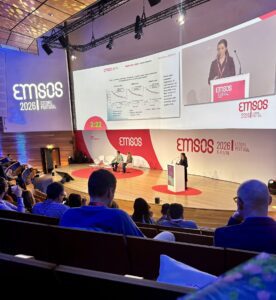
 EMSOS is a leading European society focused on musculoskeletal oncology. Each year, the congress brings specialists together to share the latest insights, treatments, and research results.
The 2026 edition took place in Portugal.
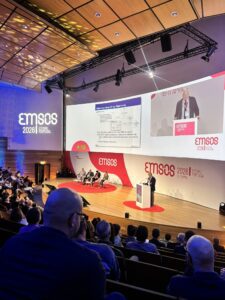
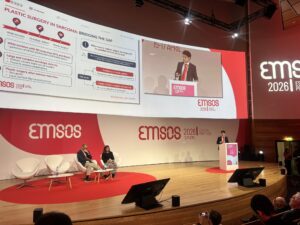
What also stood out was that the congress was not only about doctors and treating specialists. Researchers, students, psychologists, and other healthcare professionals were also present. This shows how broad sarcoma care has become today and how much knowledge is shared internationally. Collaboration across disciplines and across borders is increasing.
A patient also shared a personal testimony. This created a lot of interest, questions, and engagement from the audience. It shows that the patient voice is becoming increasingly important in care and research.
The most important message repeated throughout the congress days:
Go to the specialist. Expertise makes a difference.
Sarcomas are rare and complex tumours. That is why treatment in a specialised centre is not a small detail, but often an important factor for diagnosis, treatment, and outcome.
-
Sarcoma requires specialised care
Sarcomas consist of many different subtypes and can differ greatly from one another. That is why experience is essential.
A specialised sarcoma centre (oftentimes a university hospital) has a multidisciplinary team (multidisciplinary oncology/sarcoma consultation), including:
- specialised surgeons
- radiologists
- pathologists
- oncologists
- radiation oncologists
- rehabilitation and supportive care professionals
For patients: feel free to ask whether your case is discussed in a multidisciplinary sarcoma tumor board.
-
First the correct diagnosis, then treatment
A correct diagnosis is the basis of everything. Good imaging, biopsy, and specialised analysis are often needed before treatment is started.
For patients: do not feel rushed. A well-considered start increases the chance of the right treatment. Discuss your pathway carefully with your doctor.
-
Treatment is becoming more personalised
There is no “one size fits all” approach. The choice of surgery, radiotherapy, medication, or follow-up depends on:
- subtype
- size and location of the tumour
- age and condition
- risk of recurrence
- personal situation
For patients: two people with the same diagnosis may still receive a different treatment. That is normal.
-
Modern scans help make better decisions
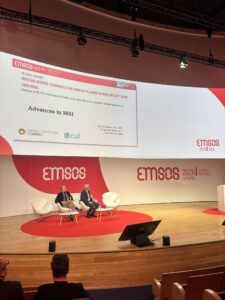
New techniques such as advanced MRI and PET scans help doctors understand tumours better and plan treatments more accurately.
For patients: a scan today is more than a picture. It also helps decide the best approach.
-
Surgery often remains a cornerstone
For many sarcomas, good surgery remains one of the most important treatments. Safe margins and the experience of the surgical team are essential.
Reconstruction and recovery are also receiving increasing attention.
For patients: feel free to ask how experience with this type of surgery is built up in the centre where you are treated, to better understand your treatment pathway.
-
In case of recurrence, options often still exist
A recurrence does not automatically mean that all possibilities are gone. New surgery, radiotherapy, or other therapies may still be useful.
For patients: ask your doctor about the options that best match what you expect in terms of quality of life.
-
New treatments are being developed
Research is ongoing into:
- targeted therapies
- immunotherapy
- cell therapy
- better combination treatments
- smarter follow-up through biomarkers
Not every innovation is already available, but progress continues.
For patients: ask whether studies are running or whether new options exist for your type of sarcoma.
-
Follow-up is becoming smarter and more personalised
Researchers are looking for ways to better predict who has a higher risk of recurrence and who may need less intensive follow-up.
For patients: in the future, follow-up will probably be even more tailored to individual risk.
-
Collaboration between experts makes care stronger
The congress highlighted how important consultation, experience, and international collaboration are in rare tumours.
For patients: a doctor who works together with other experts often provides stronger care than someone working alone.
-
Your voice matters
Quality of life, functioning, fatigue, and daily impact are becoming increasingly important in research and care.
For patients: do not only explain how you are medically doing, but also how you are really doing.
In one sentence: With sarcoma, expertise makes the difference: for diagnosis, treatment, recovery, and future chances.
Message of hope
Knowledge about sarcomas is growing. New technology, better collaboration, and more personalised care are gradually leading to better prospects.
You are not alone.
Author: Stéphanie Anzellotti, Cum Cura