ASCO 2026: Strong Momentum for Sarcoma Research
By Kathrin Schuster & Bernd Kasper, June 2026

ASCO 2026 was a remarkable year for sarcoma research: The program included several phase III trials, new targeted therapies, cell therapy approaches, translational research, and biomarker-driven strategies, reflecting the continued evolution of the field.
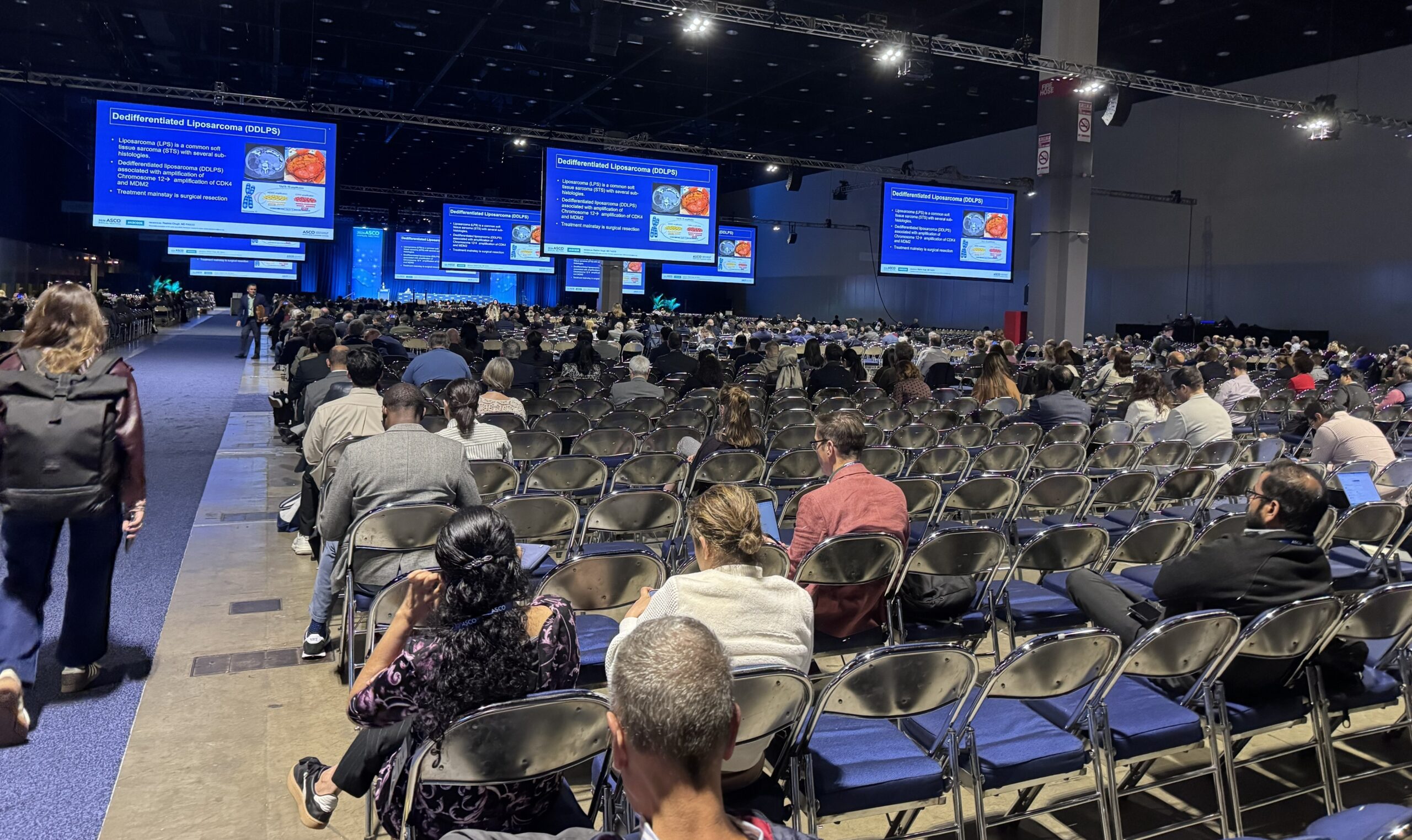
Compared with previous years, sarcoma had a particularly visible presence at this year's meeting. Not only were important data presented across multiple sarcoma subtypes, but a phase III trial in dedifferentiated liposarcoma was also featured in the ASCO Plenary Session—an uncommon distinction for a sarcoma study. Together, the presentations highlighted both scientific progress and the growing recognition of sarcoma research within the broader oncology community.
A Rare Sarcoma Presence in the ASCO Plenary Session
One of the most visible sarcoma presentations at ASCO 2026 took place during the ASCO Plenary Session, where Mark Dickson, Memorial Sloan Kettering Cancer Center, USA, presented results from the phase III SARC041 trial of abemaciclib in advanced dedifferentiated liposarcoma (DDLPS) (Abstract LBA2).
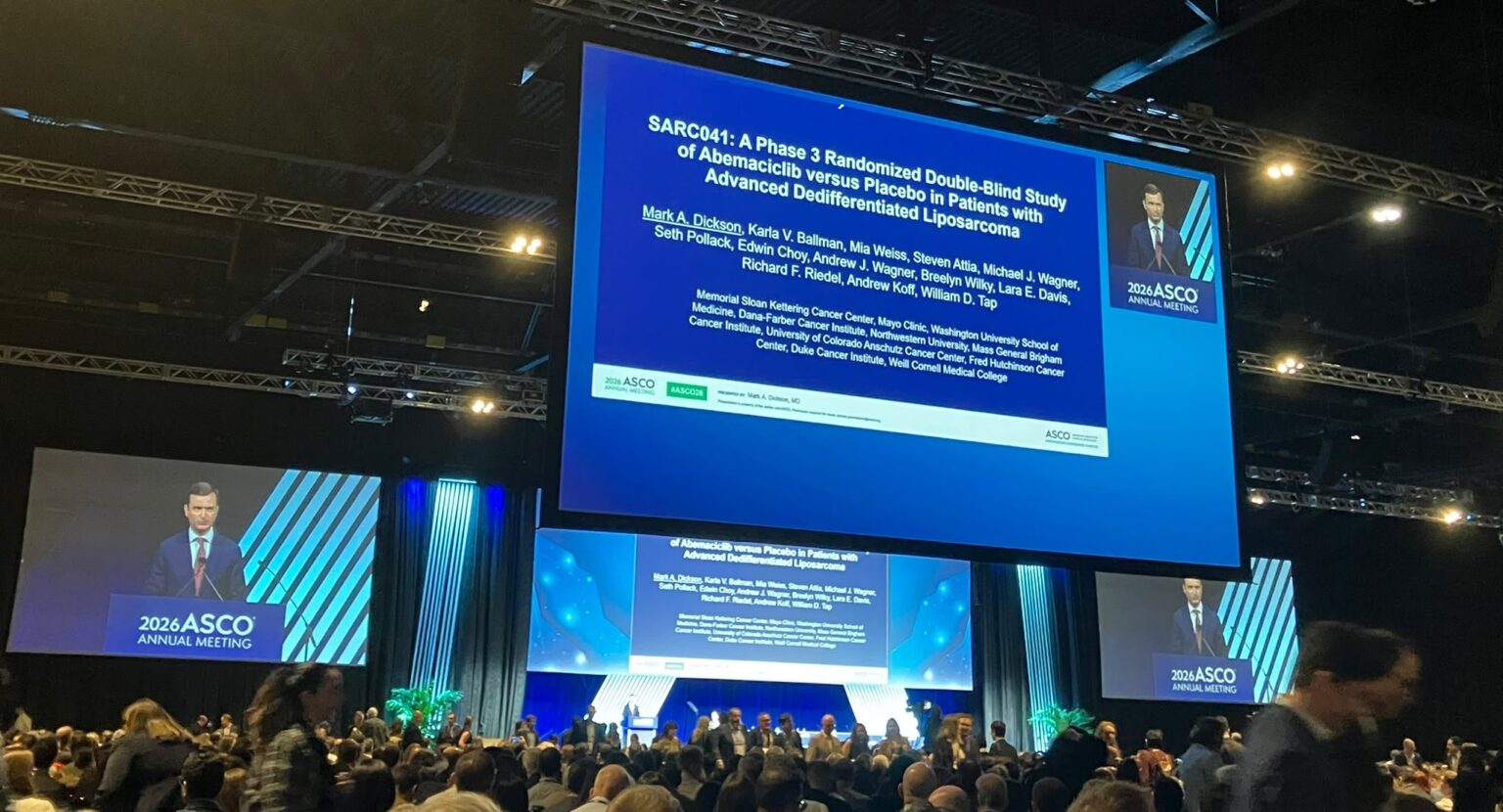
The study included 108 patients with advanced or metastatic DDLPS and compared abemaciclib with placebo. The trial met its primary endpoint, showing a clear improvement in progression-free survival. Patients receiving abemaciclib had a median progression-free survival of 9.7 months compared with 1.5 months for those receiving placebo. An encouraging trend in overall survival was also observed, despite most patients in the placebo group later crossing over to receive abemaciclib.
These findings are particularly significant because treatment options for advanced dedifferentiated liposarcoma remain limited, and currently available therapies often provide only modest periods of disease control. The results are especially encouraging because the treatment targets CDK4 amplification, a genetic alteration found in most dedifferentiated liposarcomas. As the first positive phase III trial ever conducted in this sarcoma subtype, SARC041 provides strong evidence that this targeted approach can benefit patients.
At the same time, some important questions remain. In particular, the use of placebo as the comparison group has generated discussion within the sarcoma community. Questions also remain about the optimal timing of treatment. Patients who received abemaciclib from the start appeared to benefit more than those who received the drug only after crossing over from placebo, suggesting that earlier use of the drug may provide greater benefit. Further research will be needed to better understand how abemaciclib should be integrated into future treatment pathways.
The study's selection for the ASCO Plenary Session was also noteworthy. Sarcoma studies are rarely featured in this session, which traditionally highlights research expected to have a major impact on cancer care. As the first positive phase III trial in dedifferentiated liposarcoma, SARC041 represents an important milestone and reflects the growing recognition of sarcoma research within the wider oncology community.
GIST Takes a Prominent Role
GIST was one of the central themes within the sarcoma sessions at ASCO 2026, highlighted by the presentation of the phase III PEAK trial from Andrew J. Wagner, Dana-Farber Cancer Institute, USA (Abstract 11500) and the data on velzatinib (IDRX-42), presented by Robin L. Jones, The Royal Marsden NHS Foundation Trust and The Institute of Cancer Research, UK (Abstract 11501),
The PEAK study evaluated bezuclastinib plus sunitinib versus sunitinib alone in patients with advanced GIST whose disease had progressed after treatment with imatinib. The combination significantly improved progression-free survival, reducing the risk of disease progression or death by 50% compared with sunitinib alone. Median progression-free survival increased from 9.2 months to 16.5 months, while tumor response rates improved from 26% to 46%. Treatment was generally well tolerated, with no major increase in side effects compared with sunitinib alone.
Importantly, PEAK is the first phase III randomized study in this treatment setting to show a clear improvement over sunitinib, which has been the standard second-line treatment for many years. The results suggest that targeting GIST in more than one way at the same time may help overcome resistance and improve outcomes for patients.
Additional data on velzatinib (IDRX-42) showed particularly encouraging activity in both first- and second-line GIST. With longer follow-up, the study reported response rates of 65% in the first-line setting and 40% in the second-line setting. Notably, all evaluable first-line patients experienced some degree of tumor shrinkage. In second-line patients, median progression-free survival reached 13.7 months, comparing favorably with historical outcomes reported for currently available therapies. Activity was observed across a broad range of clinically relevant KIT mutations, including mutations associated with resistance to existing treatments. The treatment was generally well tolerated, supporting further investigation of velzatinib as a potential future treatment option in GIST.
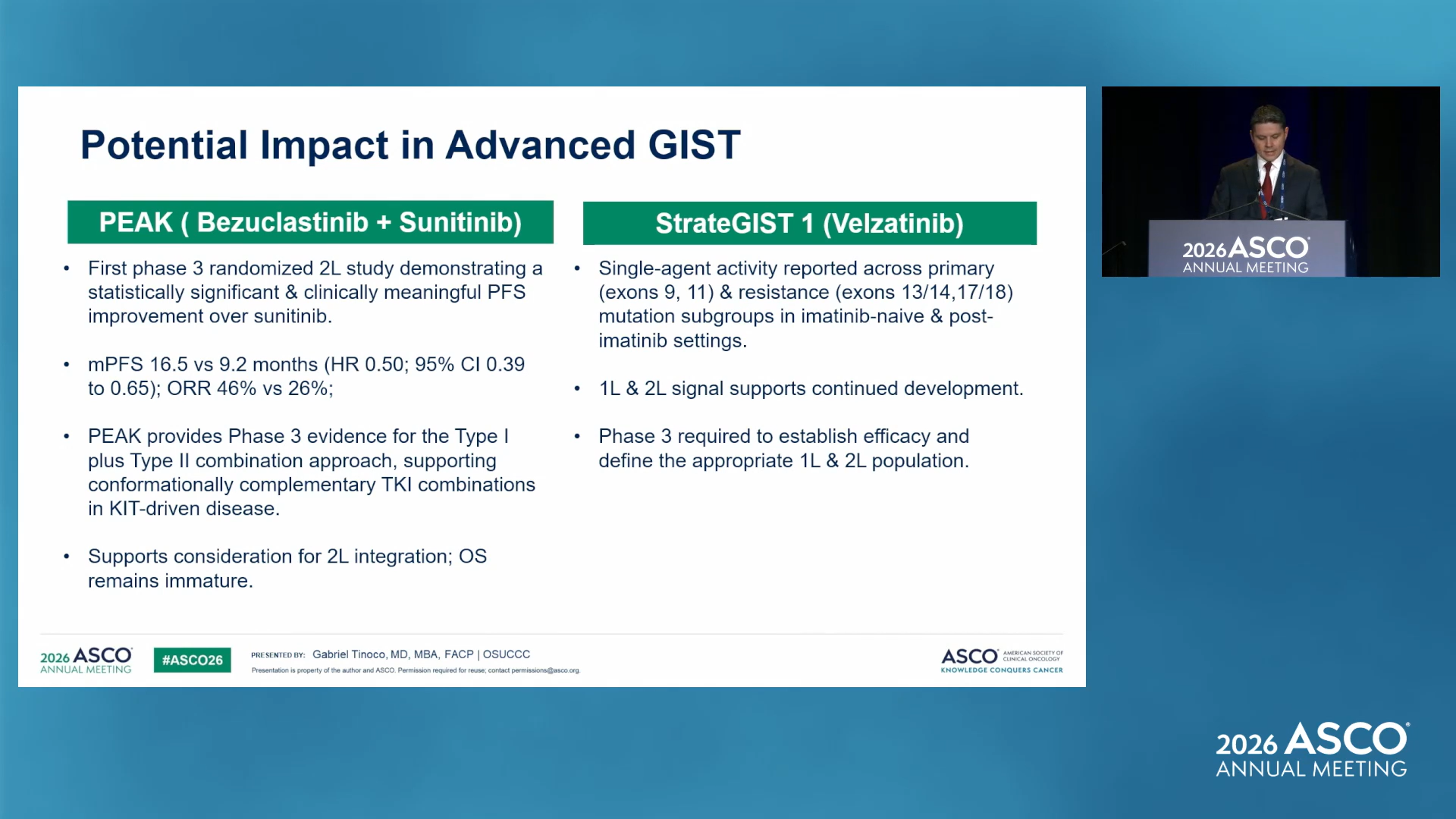
The accompanying discussion session, led by Gabriel Tinoco, The Ohio State University Comprehensive Cancer Center, USA, focused on several important questions that remain unanswered. Researchers still need to better understand how resistance develops after treatment, how blood-based monitoring tools such as circulating tumor DNA (ctDNA)—small fragments of tumor DNA that can be detected in a blood sample—can be used in routine care, and which patients are most likely to benefit from newer drugs such as velzatinib. Another key question is how these emerging therapies should be used in practice. As more effective treatment options become available, deciding on the best order in which to use them may become increasingly important.
Continued Progress in Desmoid Tumors
Another important presentation was the phase III RINGSIDE trial evaluating varegacestat in progressing desmoid tumors, presented by Mrinal M. Gounder, Memorial Sloan Kettering Cancer Center, USA (Abstract 11506).
The randomized placebo-controlled study demonstrated a highly significant progression-free survival benefit, reducing the risk of disease progression or death by 84% compared with placebo. In addition to slowing tumor growth, patients receiving varegacestat experienced higher response rates, greater reductions in tumor volume, and improvements in pain, an important outcome for many people living with desmoid tumors.
The treatment was generally well tolerated, with a manageable safety profile consistent with other drugs in the gamma-secretase inhibitor class. These results further support gamma-secretase inhibition as an effective treatment approach for patients whose desmoid tumors require systemic therapy.
Taken together, the findings suggest that varegacestat could become an additional treatment option – and potentially a future standard of care – in a disease area that has seen remarkable progress over the past few years.
At the same time, some important questions remain. As with nirogacestat, the optimal duration of treatment with varegacestat is still unclear, including whether treatment can be safely stopped after a sustained response. The potential availability of both drugs would also raise questions about treatment selection. While both have shown promising results, it remains unclear which patients may benefit most from one treatment or the other. Longer-term follow-up will help clarify their safety and effectiveness.
Increased Attention for Rare Sarcoma Subtypes
ASCO 2026 also highlighted ongoing efforts to develop new treatment options for some of the rarest sarcoma subtypes, many of which have historically had few effective therapies available.
Silvia Stacchiotti, Fondazione IRCCS Istituto Nazionale dei Tumori, Milan, Italy, presented results from the phase III APROMISS study investigating catequentinib hydrochloride (AL3818) in advanced alveolar soft part sarcoma (ASPS) (Abstract 11502). ASPS is an ultra-rare sarcoma that often affects younger adults and can be particularly challenging to treat once it has spread.
Among the 56 patients enrolled, the treatment achieved a response rate of 26.8%, including one complete response, while an additional 64% of patients experienced stable disease. Median progression-free survival reached 18.3 months, and responses were often long-lasting, with a median duration of response of almost 23 months. Importantly, APROMISS is one of the very few phase III studies ever conducted in ASPS and demonstrates that large international trials are becoming increasingly feasible even in extremely rare sarcoma populations.
Meanwhile, Binghao Li, Zhejiang University School of Medicine, China, presented phase II data from the VEBrant study evaluating vebreltinib in advanced clear cell sarcoma (Abstract 11503). Clear cell sarcoma is a rare and aggressive subtype that is often resistant to conventional chemotherapy. Vebreltinib targets the MET pathway, a key driver of tumor growth in many clear cell sarcomas. Among the 17 patients evaluable for response, the treatment achieved a response rate of 41.2%, while more than 70% of patients experienced either tumor shrinkage or disease stabilization. These results are particularly encouraging given the limited treatment options available for this disease. The treatment was generally manageable, although severe skin rash was observed in some patients, particularly when vebreltinib was combined with immunotherapy. Longer follow-up will be needed to confirm the durability of benefit and further characterize the safety profile.
In conventional chondrosarcoma, Hans Gelderblom, Leiden University Medical Center, the Netherlands, presented updated data on the DR5 agonist ozekibart (INBRX-109) (Abstract 11504). Chondrosarcoma has long been considered one of the most treatment-resistant sarcoma subtypes, with surgery remaining the main treatment option for many patients. Ozekibart works by activating a pathway that encourages cancer cells to undergo programmed cell death. In the phase III study, ozekibart significantly improved disease control compared with placebo, with 54% of patients achieving disease control versus 27.5% in the placebo group. While tumor shrinkage was observed in a smaller proportion of patients, responses were durable, lasting a median of more than 11 months. Importantly, patients receiving ozekibart also experienced a delay in worsening of pain and physical functioning, highlighting a potential quality-of-life benefit in addition to tumor control. The treatment demonstrated a manageable safety profile, further supporting this novel approach and providing continued hope for patients with advanced chondrosarcoma, where treatment options remain limited.
ASCO 2026 also featured encouraging data from the field of cell therapy. Sandra P. D'Angelo, Memorial Sloan Kettering Cancer Center, USA, presented pooled analyses of afamitresgene autoleucel (afami-cel) in metastatic synovial sarcoma and myxoid/round cell liposarcoma (Abstract 11505). Afami-cel is a type of cell therapy that uses a patient's own immune cells, modified in the laboratory to recognize and attack cancer cells carrying a specific target called MAGE-A4. The analysis included 153 patients with advanced synovial sarcoma who had already received multiple previous treatments. Afami-cel achieved a response rate of 43.8%, with some responses lasting for several years. Median overall survival reached 18.7 months, while patients whose tumors responded to treatment had a median overall survival of more than three years. Responses were observed across different patient groups, including younger patients. The treatment's side effects were generally consistent with those expected from cell therapies and were considered manageable. These results further support the potential of engineered T-cell therapies in selected sarcoma subtypes and represent one of the largest datasets reported to date for a cell therapy in synovial sarcoma.
Together, these presentations highlighted a broader trend across sarcoma research: the move toward increasingly personalized treatment approaches based on the biology of individual sarcoma subtypes. While many of these therapies are still being evaluated, the growing number of options under investigation offers renewed hope for patients with rare sarcomas that have historically lacked effective treatments.
Multimodality Treatment Remains Important
Alongside new targeted therapies and immunotherapies, ASCO 2026 also included presentations focused on improving the use of existing treatments and combining different treatment approaches.
Rosa Maria Alvarez Alvarez, Hospital Universitario Gregorio Marañón, Madrid, Spain, presented results from a study evaluating trabectedin combined with radiotherapy before surgery in patients with localized, resectable retroperitoneal liposarcoma and leiomyosarcoma (Abstract 11507). Retroperitoneal sarcomas can be difficult to treat because of their size and location, and local recurrence remains a major challenge even after complete surgical removal. In this phase I/II study, patients received trabectedin together with radiotherapy before surgery in an effort to improve tumor control and increase the likelihood of successful resection. More than 90% of patients were able to proceed to surgery after treatment, and complete tumor removal was achieved in 96% of those who underwent surgery. More than one quarter of patients experienced meaningful tumor responses, while most others achieved disease stabilization. After a median follow-up of more than three years, progression-free survival was 70% and overall survival was 85%, suggesting encouraging long-term outcomes. The combination was generally feasible and manageable, supporting further investigation of this approach in a planned phase III trial.
Additional data were presented from a randomized phase II trial evaluating second-line treatment strategies in advanced soft tissue sarcoma by Makoto Endo, Kyushu University, Japan (Abstract 11508). The study enrolled patients with unresectable or metastatic soft tissue sarcoma whose disease had progressed after doxorubicin-based chemotherapy and compared three commonly used treatment options: trabectedin, eribulin, and pazopanib. While outcomes were relatively similar across the treatment groups, pazopanib showed the most favorable results overall, with trends toward longer progression-free survival, longer overall survival, and higher rates of disease control. Importantly, no new safety concerns were identified. Based on these findings, pazopanib was selected as the most promising candidate for future comparison against gemcitabine plus docetaxel in a planned phase III trial. The study highlights the ongoing challenge of identifying the most effective treatment sequence for patients with advanced soft tissue sarcoma after first-line therapy.
Together, these presentations served as a reminder that progress in sarcoma care is not driven only by new drugs. Optimizing the use of established treatments, improving surgical outcomes, and developing more effective treatment sequences remain important priorities for patients and clinicians alike.
Understanding Sarcoma Biology
In addition to new treatments, ASCO 2026 also featured research aimed at improving our understanding of why sarcomas behave differently from one another and how patients might benefit from more personalized care in the future.
A presentation by Keerthana Sureshkumar, University of Miami Miller School of Medicine, USA, (Abstract 11519) examined genetic differences in solitary fibrous tumors, a rare sarcoma subtype. The study found that certain genetic patterns were associated with a higher risk of the cancer spreading and were more commonly seen in tumors originating in the chest. While these findings are not yet ready for routine clinical use, they may eventually help doctors better predict which patients are at higher risk and may benefit from closer monitoring.
In GIST, Michael C. Heinrich, Oregon Health & Science University, USA, presented additional analyses from the velzatinib (IDRX-42) study (Abstract 11520). Researchers examined circulating tumor DNA (ctDNA), which consists of tiny fragments of tumor DNA that can be detected through a blood test. Changes in ctDNA levels appeared to reflect how well patients were responding to treatment, suggesting that simple blood tests could one day help doctors monitor treatment effectiveness and detect resistance earlier.
Together, these studies illustrate how advances in genetics and biomarker research are helping researchers better understand sarcoma biology. Although this work may not immediately change patient care, it lays the foundation for more personalized treatment approaches and improved decision-making in the future.
A Strong Year for Sarcoma at ASCO
Overall, ASCO 2026 reflected continued progress across the sarcoma field. The meeting featured multiple late-stage clinical trials, increasing subtype-specific research, growing use of molecularly targeted approaches, and broader international collaboration.
One of the clearest messages from this year's meeting was the importance of recognizing that sarcomas are not a single disease, but a diverse group of cancers with distinct biological characteristics. The positive results presented across multiple sarcoma subtypes demonstrate how a better understanding of these differences is helping drive progress in drug development.
As more treatment options become available, identifying the right treatment for the right patient is becoming increasingly important. Future progress will depend not only on developing new therapies, but also on designing clinical trials that enroll the appropriate patient populations and measure outcomes that matter most to patients.
Finally, many of the advances presented at ASCO 2026 were made possible through international collaboration between researchers, clinicians, patients, advocacy organizations, regulators, and industry partners. Such partnerships remain essential to advancing research and improving outcomes in rare cancers.
While challenges remain, ASCO 2026 highlighted a field that is steadily moving forward, with a growing focus on personalized treatment approaches and strong collaboration across the global sarcoma community.

This article was created with the support of AI.