When standard care is not enough: Swedish hospital runs Whole Genome Sequencing routinely for sarcoma
by Magnus Carlsson
One of the major challenges in sarcoma is that diagnosis is often complex. Tumors may look identical under the microscope yet behave very differently in the body. Nevertheless, healthcare has long relied on diagnostic methods that, in many cases, do not provide the full picture.
The consequences can be serious. An incomplete or inaccurate diagnosis leads to incorrect – and thus ineffective - treatment. Also, too much treatment can be just as harmful as too little. And sometimes, it may later turn out that the patient never had malignant cancer at all.
This is the background to why Whole Genome Sequencing (WGS) - a technology that maps the entire genome - is so transformative. The tumor’s genetic alterations determine how aggressive it is, how it spreads, and indicate treatments which may be effective.
A breakthrough in Swedish sarcoma care
A decisive step was taken in Sweden a few years ago. At Karolinska University Hospital and Karolinska Institutet in Stockholm, a study was launched in which all patients with suspected sarcoma underwent Whole Genome Sequencing (WGS) as part of the diagnostic process. The aim was simple yet powerful: to determine whether deeper genetic analysis could improve diagnosis and, consequently, treatment.
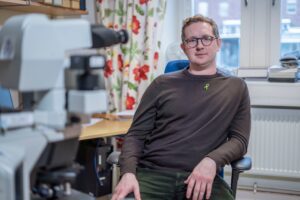
Felix Haglund de Flon and colleagues showed in a study how genomic profiling alters clinical diagnosis of sarcoma
The results, published in 2024, were transformative:
- In more than ten percent of cases, the diagnosis was changed after whole-genome sequencing. This means that one in ten patients had previously been at risk of receiving incorrect treatment - without anyone knowing it. With the correct diagnosis, treatment can be tailored, increasing survival rates, reducing unnecessary suffering, and generating cost savings.
- Even more striking is that approximately 6 - 7 percent of patients were found to have benign tumors, despite initial assumptions of malignant cancer. For these individuals, genetic analysis meant a complete change in life circumstances - from preparing for chemotherapy and lifelong consequences to undergoing a much simpler operation and then moving on with their lives.
- In addition, genetic alterations were identified in approximately 15 percent of patients who did have malignant disease—alterations that opened the door to targeted therapies. Treatments that otherwise would never have been considered.
Updated study results will be released this year reflecting data of 600 patients – parts will be available for SPAGN’s annual conference in May, so don’t miss our session there.
Overtreatment - a silent systemic failure
When we talk about overtreatment in cancer care, the focus often lies on care at the end of life. But the results from Whole Genome Sequencing show that the problem is far broader.
Chemotherapy is generally not dosed according to the amount required to eliminate the specific tumor, but according to how much the body can tolerate without the patient dying. This says a great deal about how blunt our tools still are.
Such treatments place enormous strain on patients - physically, psychologically, and socially. They affect the ability to work, family life, and future prospects. At the same time, the costs to society are very high, both in direct healthcare expenditures and in lost quality of life.
When Whole Genome Sequencing can demonstrate that some patients do not need these treatments at all – or need entirely different types of medication- the question becomes unavoidable: what does it cost us not to use this knowledge? [i]
An investment - not an expense
Healthcare in Sweden faces major financial challenges, like in most other countries. Regional health authorities are struggling with multibillion deficits while the number of cancer diagnoses continues to rise. In this context, new technology can easily be dismissed as “too expensive.”
But Whole Genome Sequencing must be viewed from a different perspective. Getting the right diagnosis from the outset reduces the risk of incorrect treatments, unnecessary surgeries, and ineffective medications. This saves resources - and, above all, human suffering.
The outcome of the study led Karolinska University Hospital to immediately decide that Whole Genome Sequencing would become routine clinical practice for suspected sarcoma. This is a very important step. But it is not enough.
What needs to be done now?
 Increasingly, international studies also indicate that Whole Genome Sequencing at diagnosis will be the way forward.[ii] The socioeconomic impact of introducing WGS for all rare cancers should be investigated through international collaboration - not only in terms of monetary cost, but also in reduced suffering and improved quality of life.
In Sweden, the sarcoma association demands that patients with suspected sarcoma or other rare cancers be informed about the possibility of Whole Genome Sequencing and be able to request it as part of their care.
My vision is that all health care providers treating sarcoma would implement one day WGS as a standard component of the diagnostic process. I am aware though that in many low-income countries it would be beyond their realities for years to come.
Rare cancer has long been an area where progress has been slow and where patients have paid the price for gaps in knowledge and resources. Whole Genome Sequencing hopefully closes a major gap and shows that this does not have to be the case.
The right diagnosis at the right time is not a luxury. It is the foundation of modern, equitable, and humane cancer care.
[I] For some genetic indications, however, there are still no treatment options currently available.
[ii] Read more about these in Roger Wilson’s blog post on Whole Genome Sequencting published in June 2025: https://www.sarcoma-patients.org/blog/roger-explores-wgs/
Credit: Photos provided by Magnus Carlsson to SPAGN for publication
Bio:
Magnus Carlsson is a former President of the Swedish sarcoma patient organization, Sarkomföreningen, which he led from 2020 to 2023. He continues to be actively engaged in communication related to sarcoma and other forms of rare cancer. Magnus is an advocate of Whole Genome Sequencing and more and better data as measures to improve diagnosis, treatment and survival rates for sarcoma patients. Magnus lost his daughter to angiosarcoma.