Reflecting on 2025: The global sarcoma community is shaping up
by Kathrin Schuster
Looking back at 2025, I feel excited and confident: Our progress as a global sarcoma patient community has been remarkable. Through collaboration, trust, and a willingness to learn from one another, we turned ambitious ideas into concrete achievements—proving once again that we are stronger together.
The first ever global sarcoma patient survey
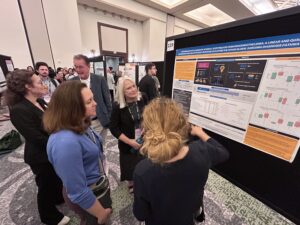
SPAGN presenting the results of the first global sarcoma diagnosis pathway survey at the CTOS annual meeting 2025
A game changing highlight this year was the successful implementation of the first ever Global Sarcoma Diagnosis Pathway Survey. I still remember the stages — the translations, the outreach, the hopeful “let’s try this” attitude. Then the responses began to arrive: dozens, then hundreds, and eventually more than 1,800 participants from 49 countries. When we closed the survey and started analyzing the filled questionnaires, it felt like a blurred picture finally coming into focus.
For the first time, we could present concrete data that confirmed suspicions we had about the challenges in sarcoma diagnosis. It allowed us to bring a truly patient-driven perspective to international medical and scientific congresses such as ESMO[1] or CTOS[2]and engage healthcare professionals with evidence grounded in real experience. These findings will lay the foundation for a broader reflection on how to address the gaps and challenges our data reveal.
The first SPAGN conference outside Europe
That momentum of collaborative spirit continued into our Annual Conference — the first ever outside Europe, co-hosted with the U.S. National Cancer Institute. The room brought together familiar faces, and many new voices with approximately 35% first-time participants, including many groups from the US (40%) and Latin America. This diversity sparked conversations across continents and specialties. Amid a world of uncertainty, the conference demonstrated that as the sarcoma community we stand together — united and connected even in disruptive times.
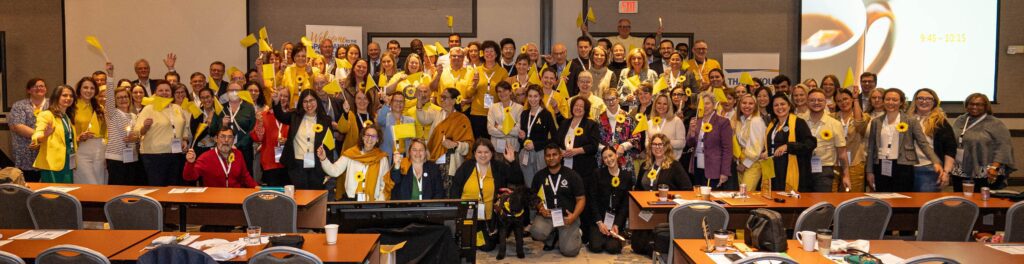
Over 120 patient advocates and experts gathered in Washington D.C. for the 15th SPAGN Annual conference.
A worldwide rally of patients: Know your normal
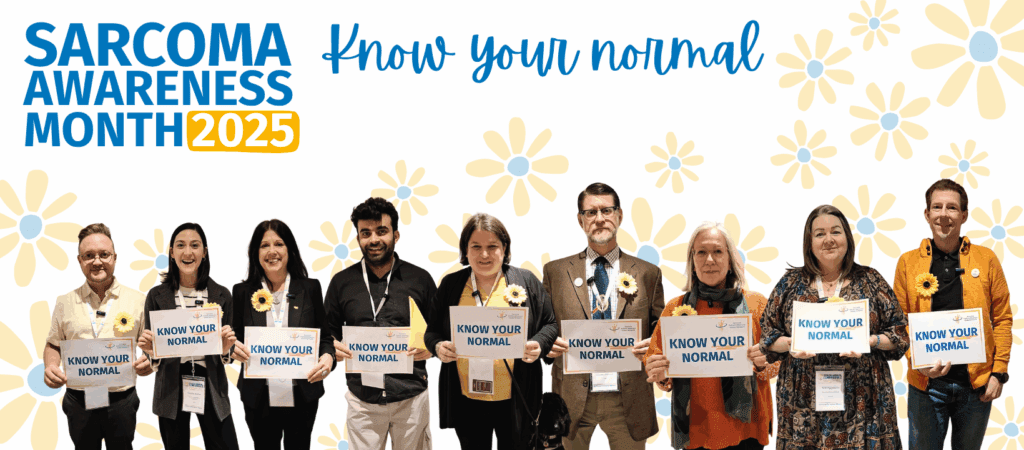
One of the most inspiring moments of 2025 came during the Sarcoma Awareness Month in July, when groups from around the world rallied around “Signs & Symptoms: Know Your Normal.” Seeing this message echoed in over 30 patient groups and other stakeholders, and in at least 10 different languages was a vivid reminder of the power of aligned action to improve early diagnosis.
International collaboration to improve treatment
SPAGN coordinated and participated this year in two international projects that will develop guidance for optimized treatment: The LMS Consensus Initiative and the Hereditary Predispositions in Sarcoma collaboration. These projects will result in publications accessible worldwide for treating physicians and patients, helping translate expertise into practical care and making a real difference for those living with sarcoma – independent of where they live and whether specialized sarcoma expertise is available.
SPAGN made sure the patient voice is heard
Behind the scenes, SPAGN made sure that the patient voice was included from the start of various projects and policy initiatives by providing inputs, promoting collaboration or co-developing research proposals. These often quiet, technical steps keep our global work moving. Across all our achievements — surveys, conferences, awareness campaigns, consensus initiatives, and storytelling — progress depends on patients, advocates, clinicians, and researchers working together. Collaboration is not just a principle; it transforms individual efforts into global impact. As we now shape our Strategy for the upcoming 5 years, I’m reminded how vital networking and trust are — and how much experience and insight reside within our member organizations, our board and working groups.
Challenges ahead
 But 2025 has been also quite a challenging year, let’s admit it. Across the globe we are watching unsettling shifts: research priorities in major early-phase trial countries are moving away from rare cancers, healthcare systems are tightening under immense cost pressure, and our growing scientific understanding is fragmenting sarcomas into ever-smaller subtypes. The latter represents a welcome and needed progress in knowledge — but it also means that patient populations eligible for clinical trials become so small that generating the randomized data often required by regulators like the European Medicines Agency (EMA) or the US Food and Drug Administration (FDA) becomes nearly impossible. At the same time, political and institutional decision-making is becoming more inward-looking, with leaders prioritizing national interests over global responsibility. For a cancer field that has been chronically underfunded for decades, even small changes in direction send shockwaves — slowing innovation, weakening clinical progress, and threatening irreplaceable expertise and infrastructure. What this means? Sarcoma patients could be left behind once again. And that is something we cannot accept. Meeting these challenges will require the same spirit of unity that carried us through this year.
Building on our strengths
If 2025 taught me anything, it is this: our strength has never come from a single project or organization, but from the people who give their time, insight, and heart to this community. Together, we’ve shown that collaboration doesn’t just move the landscape of sarcoma — it transforms it. I’m excited to see what next year will bring and confident that, united, we can continue making a real difference for sarcoma patients around the world.
[1] European Society of Medical Oncology Annual Meeting 2025
[2] Connective Tissue Oncology Society Annual Meeting 2025
Credits: Photos by SPAGN
Bio:
Kathrin Schuster is the Chief Executive of the Sarcoma Patient Advocacy Global Network (SPAGN).